Policy Bytes
Team Strategy | Rapid Prototyping
The Challenge
A new, online platform for Citizen's League to present public-policy debates between thought-leaders.
Citizen's League was looking to extend their platforms to include a bi-monthly, curated discussion platform.
The Debate Format
Breaking the mold of usual debate platforms, the format needed to be able to facilitate up to 4 thought-leaders at a time.
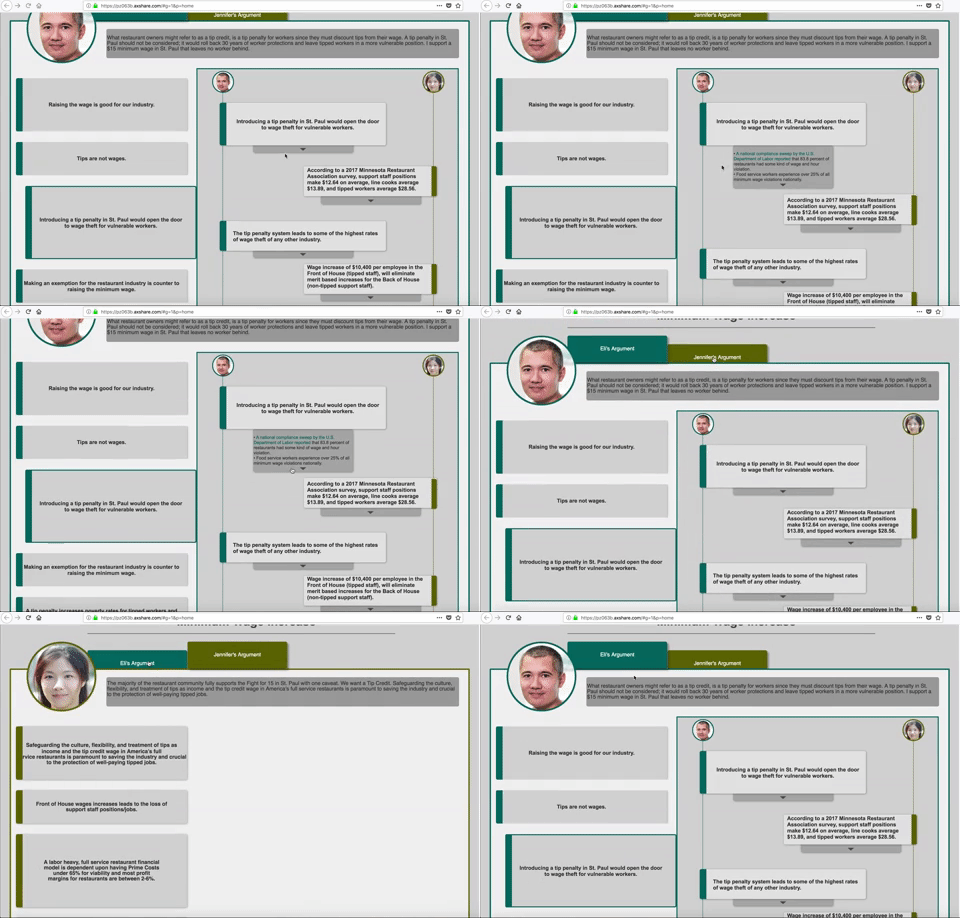
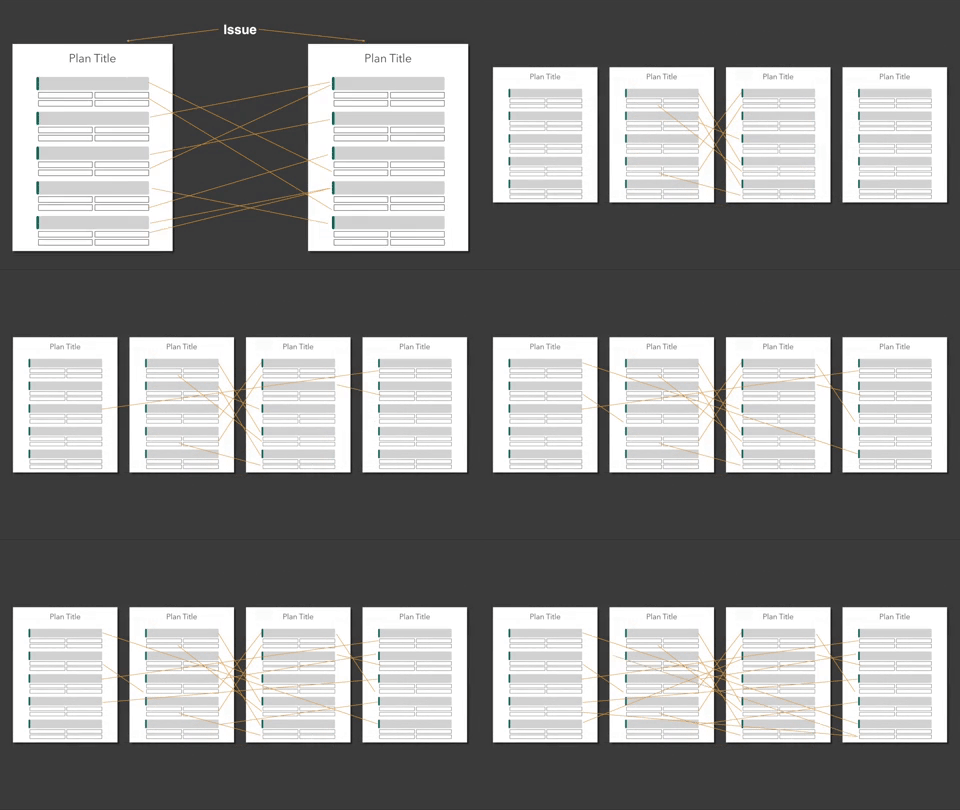
The Policy Bytes platform is unique and innovation was required for relating the discussion points and for representing the discussion format.
The debates themselves are not live and all discussion actually happens behind-the-scenes.
Static documents are delivered between the thought leaders wherein they are responding to, critiquing and rebutting individual points/premises.


Building for Bias
Anchoring Bias: the tendency to be over-reliant on the first piece of information.
When creating a page layout we were noticing that, despite our best and most innovative measures, there was always going to be a first piece of information read.
You can't negate or avoid bias. The only choice is to use it.
While we initially explored ways to innovate upon how we were positioning information, we found that negating the bias itself couldn't even theoretically be considered. We instead turned our attention toward using this anchoring bias.
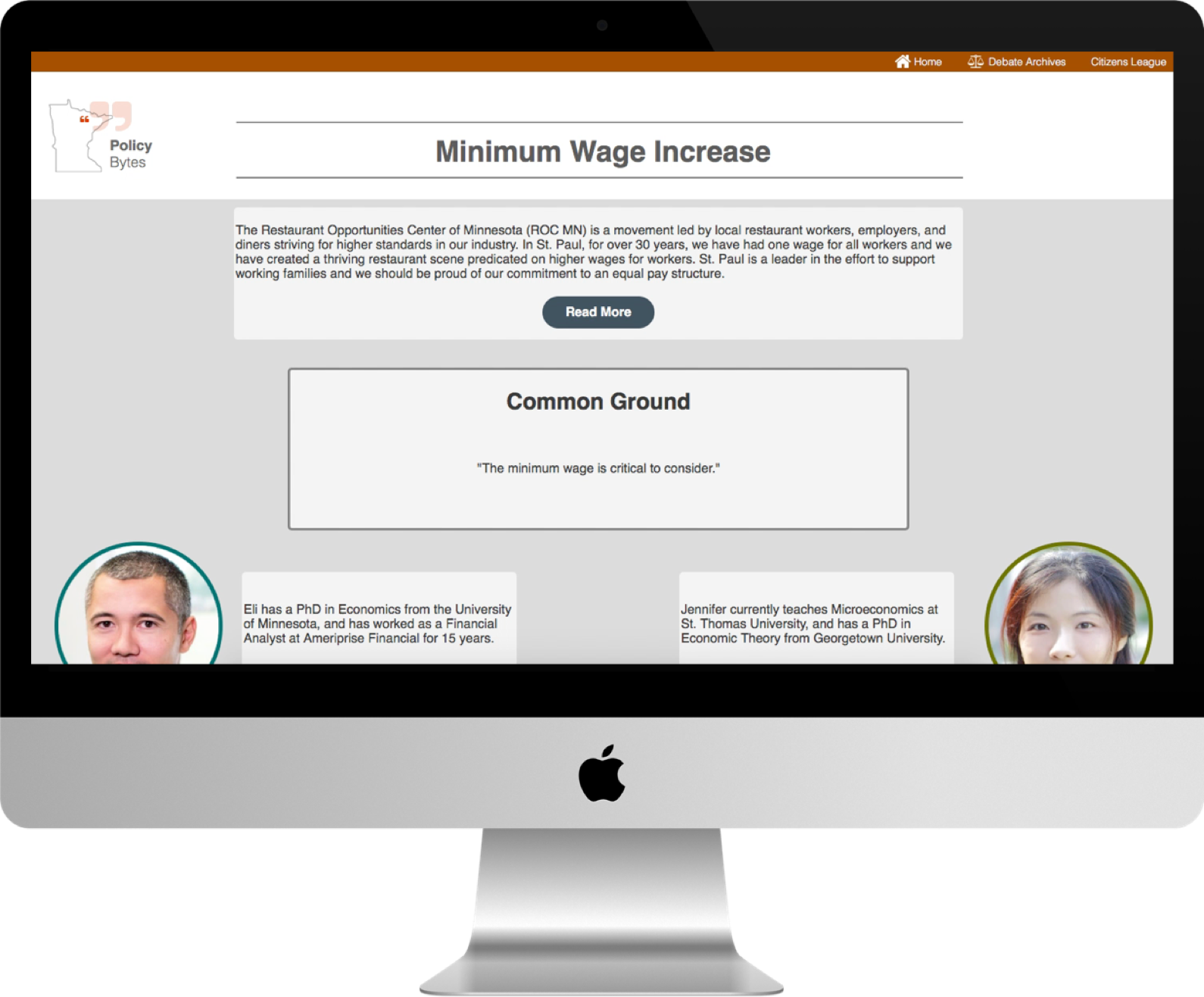
How can we intentionally, deliberately and meaningfully anchor users in these discussions?
Landing page, common ground box

Facilitation of Research
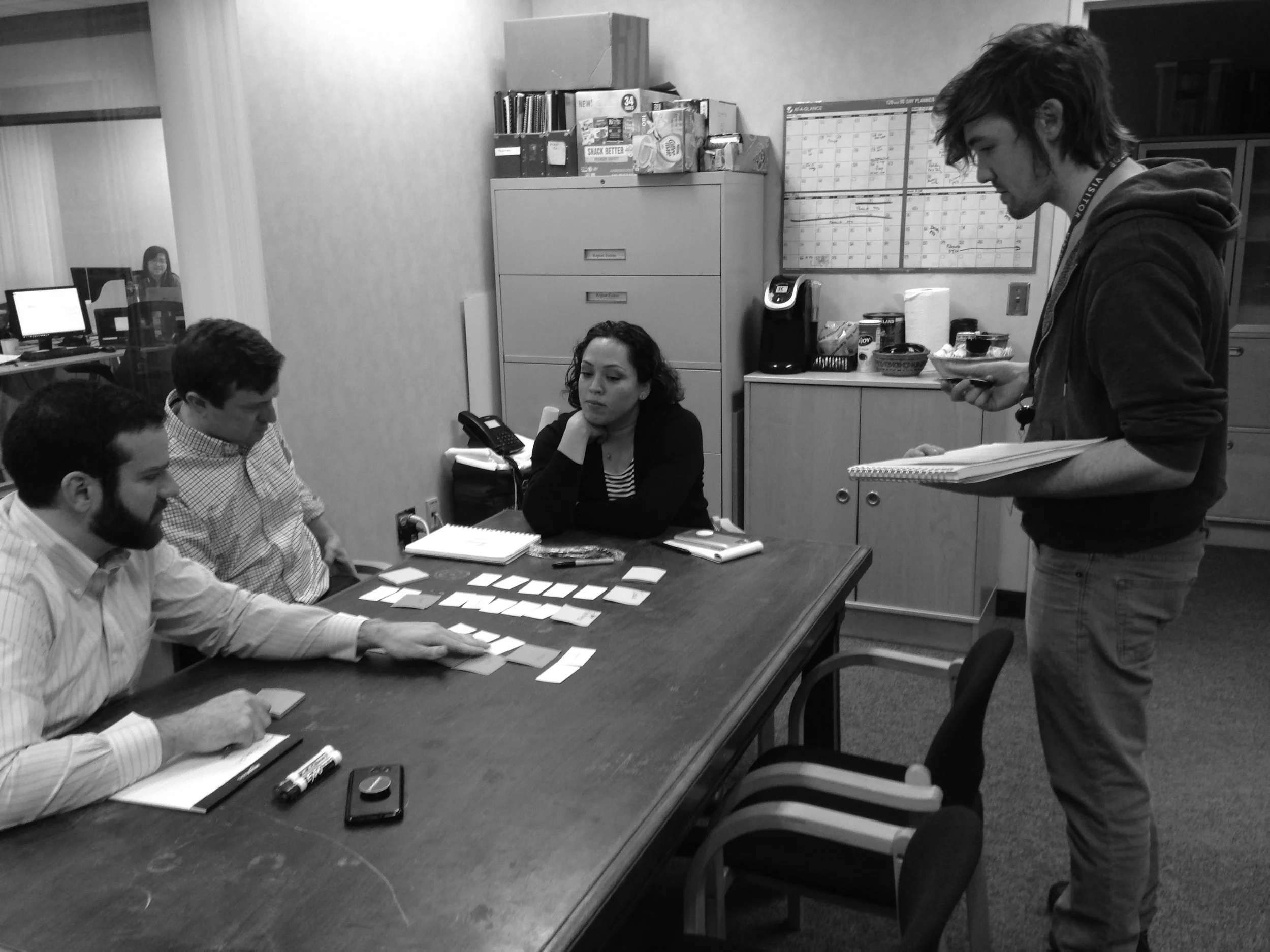
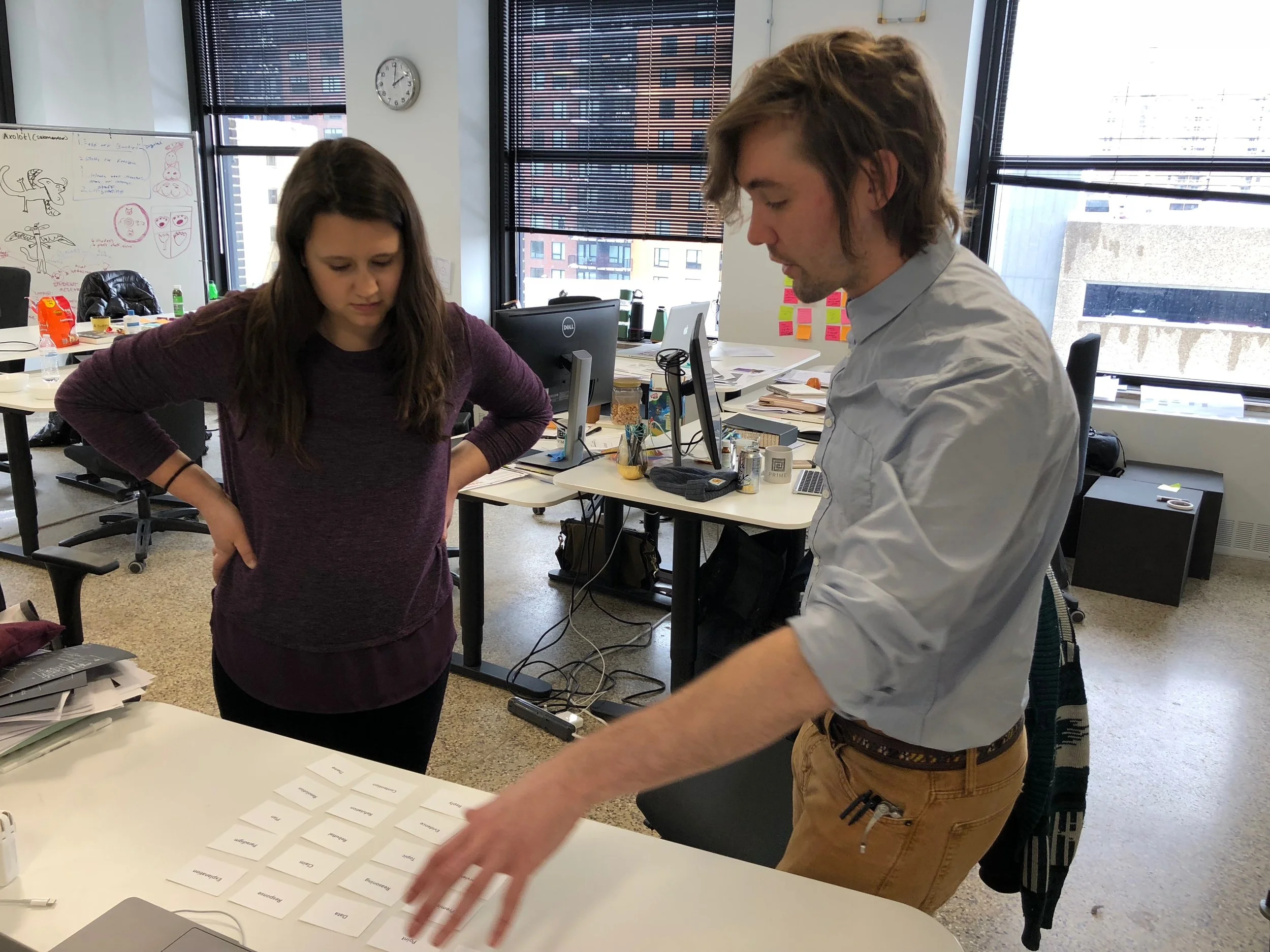
Designed and facilitated a card-sorting research exercise for Citizen's League staff.
Gaining insights into how the Policy Bytes format fits into Citizen's League mental model, their other platforms and how they create hierarchies of information internally. The script I wrote for our protocol assisted us in pulling out insights through carefully constructed questioning patterns.
Conducted in-person prototype testing, interviewing and synthesizing of these sessions.
Putting our prototypes in-front of users revealed which features were intuitive and which were not.
Strategizing for Innovation
Utilize established design patterns to ground users within our unexpected platform. Test where we innovate, not where we are standard.
While we were innovating on the ways in which we present the discussions, we utilized design systems with real world affordances. This grounds the user amongst the innovation, giving them something to orient their experience to. If you innovate everywhere, your user will become lost.
For example, beneath each argument box we have a file-cabinet or "drawer" where users can find the supporting evidence, files and data supporting each argument. The tabbed navigation also plays off of these real-world models as debaters present their "case files" or policy plans.